Traceability
Traceability and CSR: there will never be a right moment, start now
What place for CSR on store shelves? Aware of the environmental, societal and economic stakes, a growing share of consumers has turned into consum-actors. One more challenge for manufacturers already weathering economic, health and environmental crises. But since CSR is a formidable opportunity to stand out, do not wait for competitors to move first. Manufacturers have everything to gain by starting now. Here is why.
Traceability and CSR: a consumer expectation
When 76% of French consumers mobilize in favour of responsible consumption (per the latest ADEME and Greenflex barometer), manufacturers cannot ignore CSR. The principles of respect, ethics, legality, accountability and transparency that define it positively shape the image of committed companies.
Food: attentive consumers
Consumers have never been so informed and attentive to what goes in their basket. According to an LSA study for Avery Dennison, 81% of French consumers say they pay attention to product composition. Apps like Yuka have played a real role in changing habits, and even recipes: when 92% of Yuka users (33 million worldwide) say they put back products the app rates red, it is logical that manufacturers and retailers improve their compositions. Health remains a top concern: per Yuka, 95% of surveyed users stopped buying products containing controversial additives, and 84% buy more unprocessed products since using the app.
Beyond health, consum-actors care about the ecological footprint and the provenance of the food they buy, as shown by the rise of environmental scoring systems and of local products.
Textile: informed consumers
The scandals that hit textile deeply affected the sector's reputation and shifted consumer perceptions. The industry is living a paradigm change, with second-hand sales booming and the slow fashion movement rising. Brands must distance themselves from the negative image of fast fashion and communicate a more ethical one, to keep attracting consumers who care about manufacturing conditions and environmental impact. Where do the raw materials come from? Where, by whom and how was the garment made? How many kilometres did it travel? Satisfying customer curiosity is how a brand proves its good will.
Made in France and local: the rise of consum-actors
Choosing what you consume is a political act. Choosing local, even more so. Consumers favour terroir in a globalized world: 84% of French people consider regional products an important purchase criterion (Credoc, 2020). The trend accelerated with the Covid-19 pandemic and the sovereignty debate: per an OpinionWay study, 64% of French consumers increased their purchases of French products since the start of the health crisis.
Product origin: a way to stand out
Committing to CSR lets manufacturers change the conversation and communicate positive commitments, showcase their products, teams and factories, and stand out against competitors. A real opportunity in a context of crisis and inflation. So why wait?
Transparency to win consumers
An estimated one French consumer in two has already given up buying a product because of missing information. Traceability is no longer a request but a consumer requirement and a critical issue for manufacturers. Forward-looking players have every interest in getting ahead of the market by meeting consumer expectations, rather than waiting for a new law to force them.
Transparency to win retailers
Mass retail understands the shift in consumption habits and wants to answer it on its shelves. Manufacturers must do everything to keep meeting retailers' requirements: packaging and written communication must convincingly carry the brand's values, and clear, transparent origin information earns better listing with distributors.
How to put traceability and CSR in place today
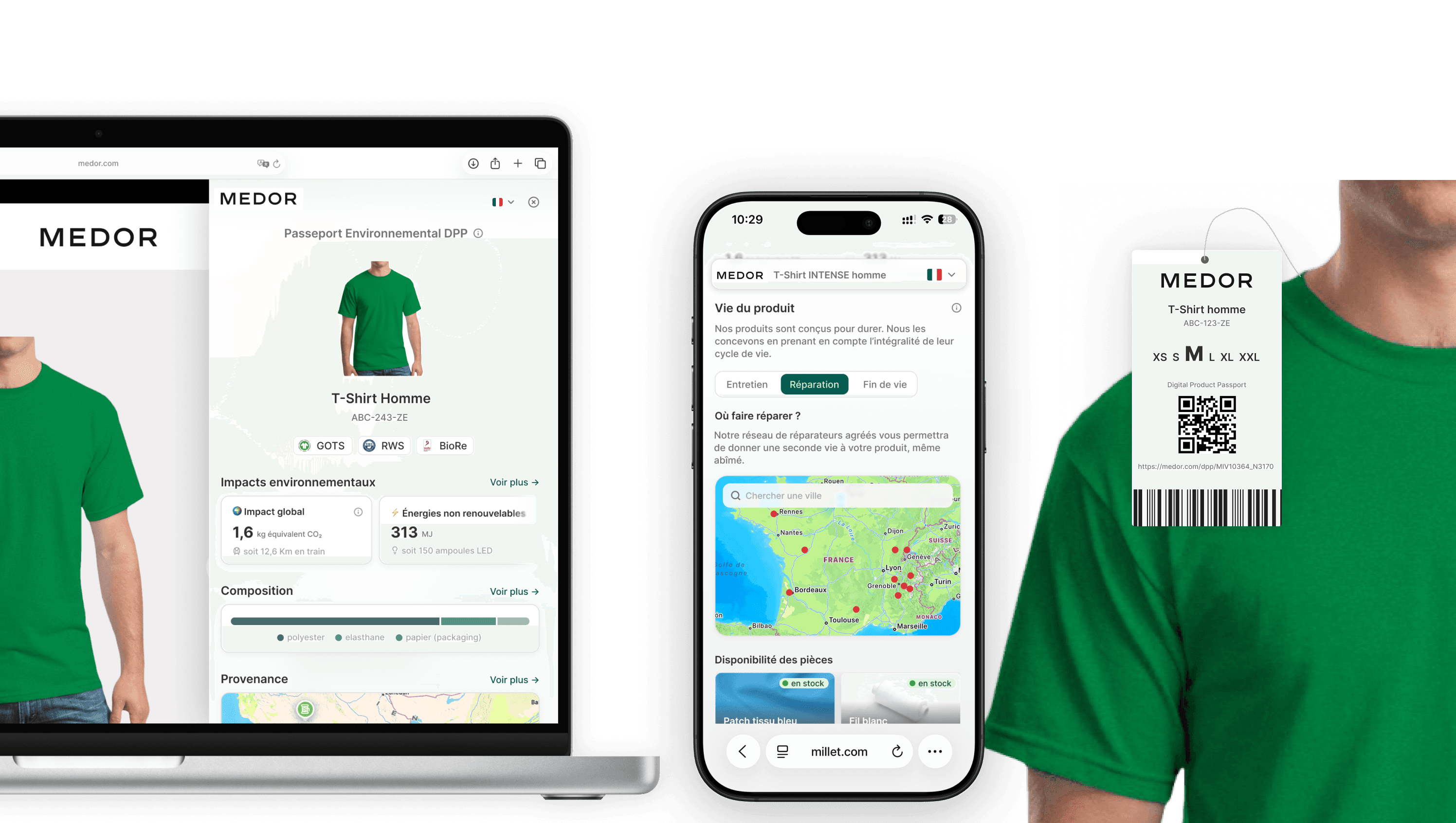
CSR also raises greenwashing suspicion. Fine words no longer suffice, and consumers are informed enough to detect a facade. To show good faith, manufacturers must provide proof, with a reliable, high-performing traceability system. Supply chain fragmentation can be an obstacle to gathering the necessary information. To secure the system, manufacturers can rely on blockchain technology, which collects information in real time, secures it and distributes it along the supply chain, creating a genuine chain of trust down to the consumer, who just scans a QR code on the label to access the product's characteristics, origin and manufacturing conditions.


